


Remember the Christmas Carol? Remember Tiny Tim, and the crutch he used? How it was hard and wooden and unforgiving? Since then, medicine has been through many revolutions. But the crutch is stuck in 1830. The general design prescribed most often today still has that same basic danger - nerve damage to the hands and armpits, wrist pain, tripping and slipping.
But now, Mobilegs is here.
A crutch that’s designed ergonomically, around the human body.

Jeff Weber - industrial designer, Mobilegs inventor.
The accident that started the movement.
When industrial designer Jeff Weber suffered a serious foot injury, it only took him a day on traditional crutches to realize something was very wrong.
His wrists were sore, the palms of his hands were tingling and numb, and his armpits kept jamming against the rigid aluminum frame.
Jeff wasn't just any patient. He's the industrial designer who co-designed Herman Miller's award-winning Embody chair - a design born from nearly two years of research with physicians and ergonomists. He knew a thing or two about designing around the human body.
So he set about creating what became Mobilegs. And thousands of physicians, surgeons, athletes, soldiers, movie stars and everyday people are moving more because of it.
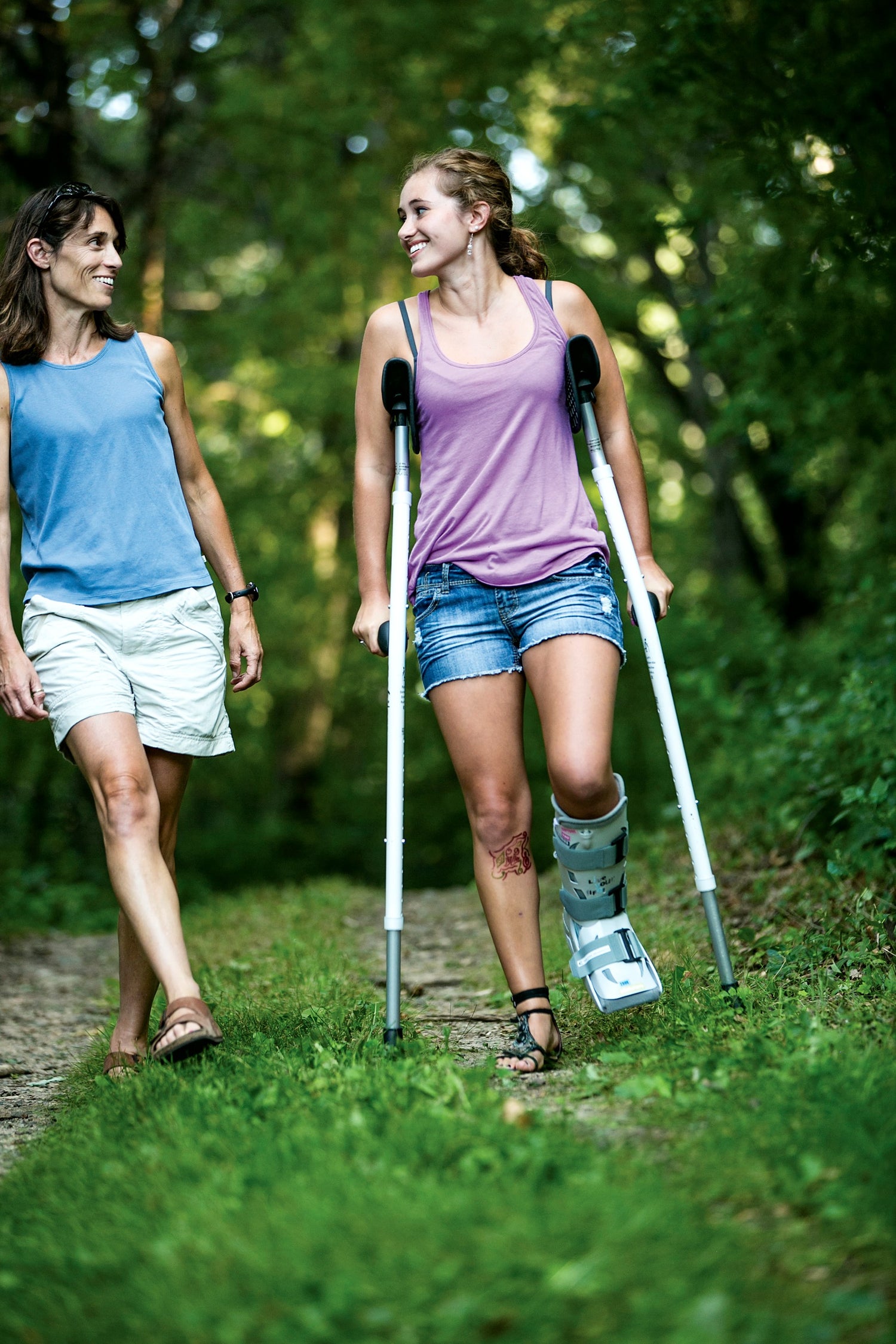
Movement is good for you.
Nobody dreams about one day using crutches. Not even ones as sleek and efficient as Mobilegs.
But if you have to use a crutch, whether temporarily or long-term, the idea is to get you moving and keep you moving, as easily and comfortably as possible.
It helps in your recovery from surgery. It improves your long term health. And it makes day-to-day life more enjoyable. Simple as that.
Why Mobilegs
Designed around the human body
Three places traditional crutches work against you—and how Mobilegs changes the experience.
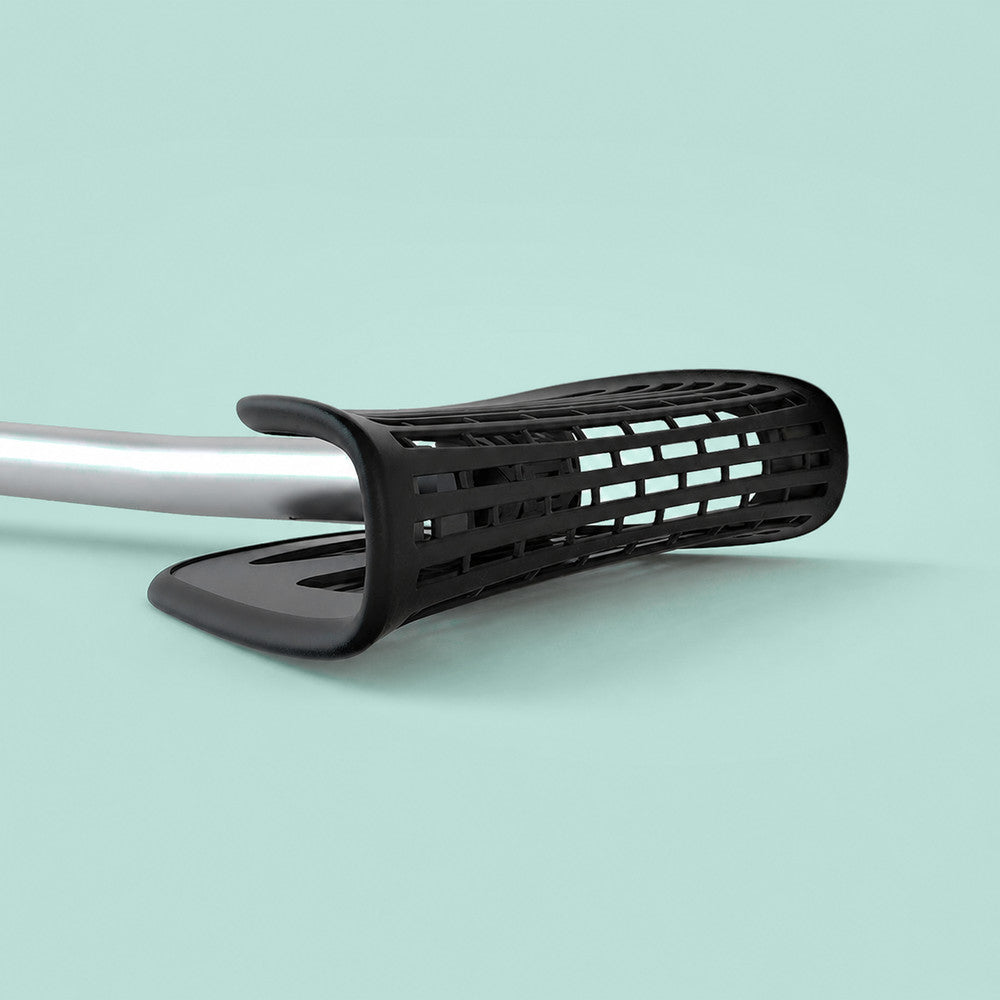
Underarm comfort
A saddle that moves with you
NO A hard, unforgiving chunk of metal digging into your armpit.
YES A flexible saddle on top of a pivoting, tilting, forgiving mount. That is also easy to grasp between your arm and body.
NO Un-adjustable form.
YES Adjustable not just once but twice.
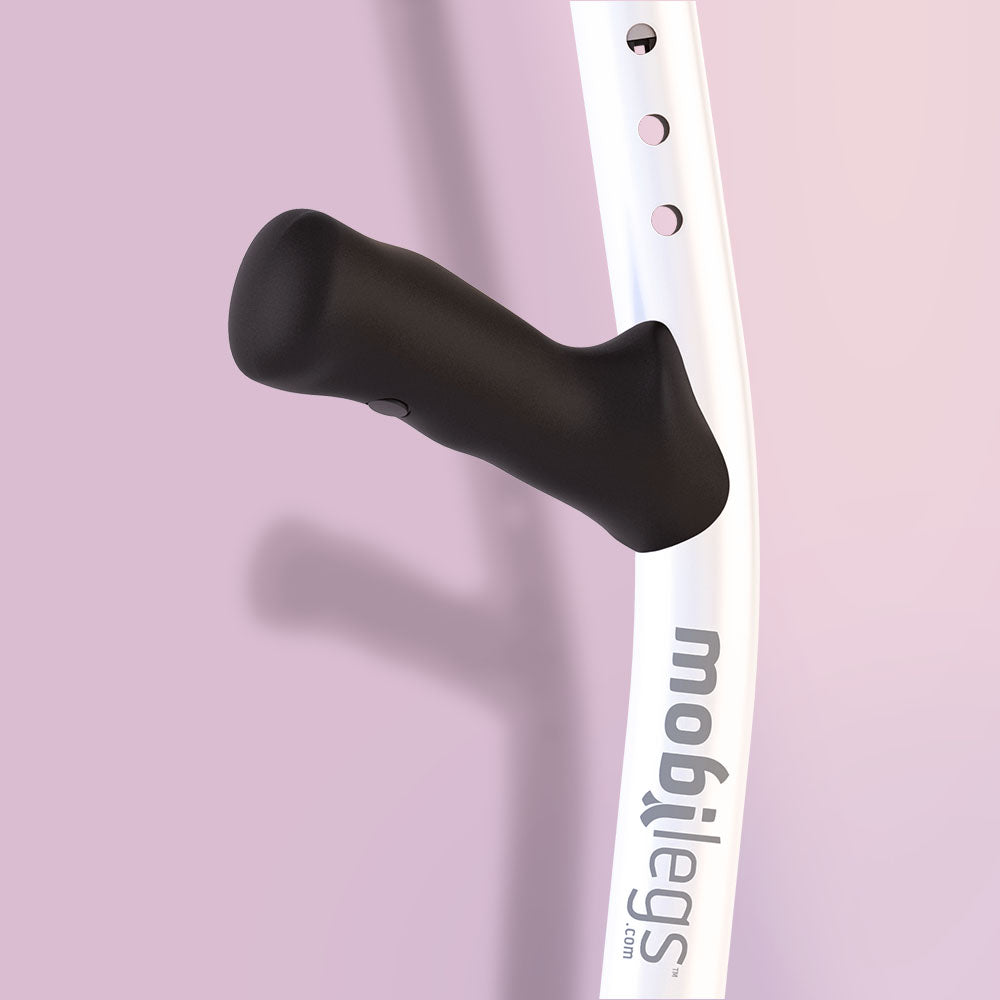
Hand comfort
A grip shaped for your hand
NO A flat, severe bar attacking the palm of your hand.
YES A form-fitted, angled handgrip that spreads the load evenly and away from pressure points.
NO Heavy.
YES Lightweight. Mobilegs weigh just 2 lbs per crutch.
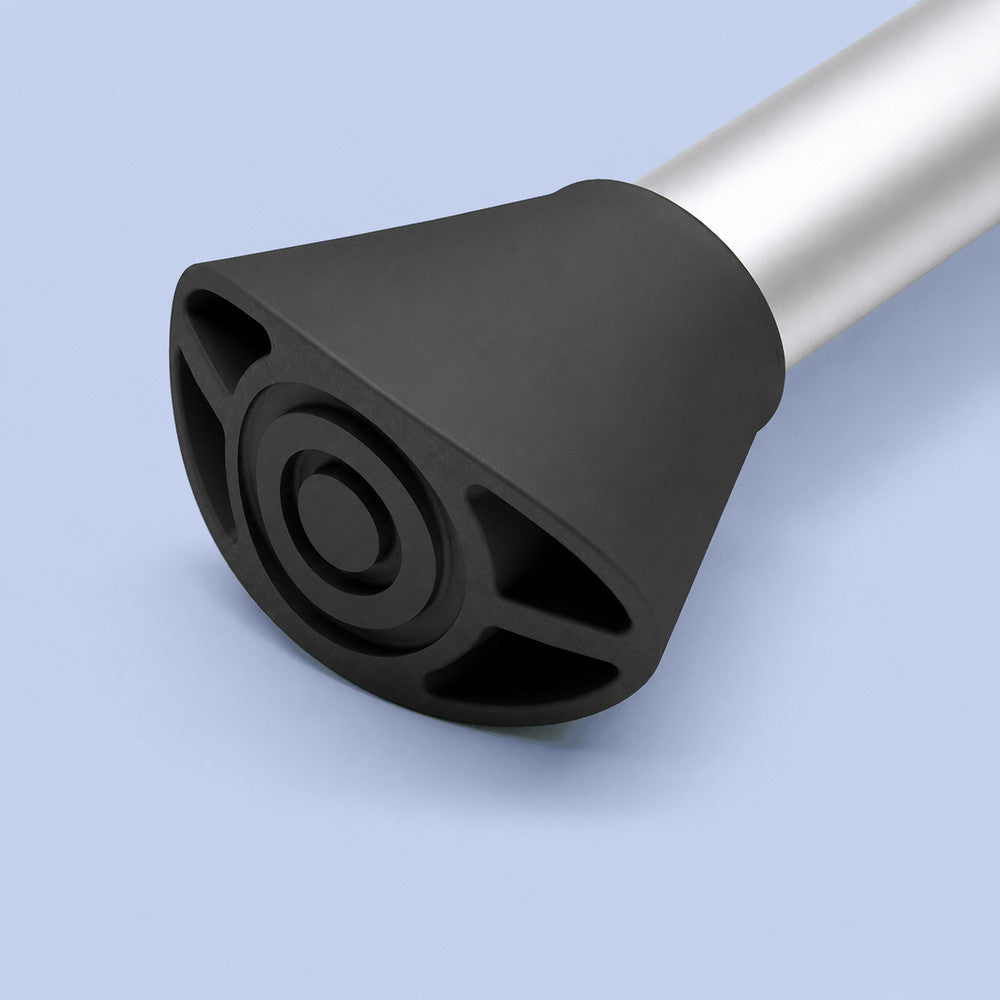
Natural movement
A frame built around your stride
NO Straight, unyielding lines that do not adjust to your body.
YES A contoured shape to make room to swing your hips, and to help prevent you from tripping.
NO Flat, clumsy feet.
YES Curved feet to improve gait and traction.
Biomechanical proof
Designed differently. Proven results.
In biomechanical testing, Mobilegs were compared with standard axillary crutches using pressure mapping, force-platform measurements, and motion-capture analysis. The results strongly favored Mobilegs across measures of gait mechanics, underarm pressure, and joint extension.
Source: Iowa State University, Department of Kinesiology
The crutch has finally caught up.
Meet Mobilegs Ultra, designed around every point where the crutch meets your body and the ground.